Stacks Guru is born from the need to search the vast number of videos out there on stacks built for Stacks Pro and the Stacks 5 plugin for Rapidweaver.
We have scraped over 500 videos to get the transcripts for each in order to make the spoken word searchable.
Please use this free tool to help you learn and discover the awesome power that Stacks and the stacks made for Stacks have to offer.
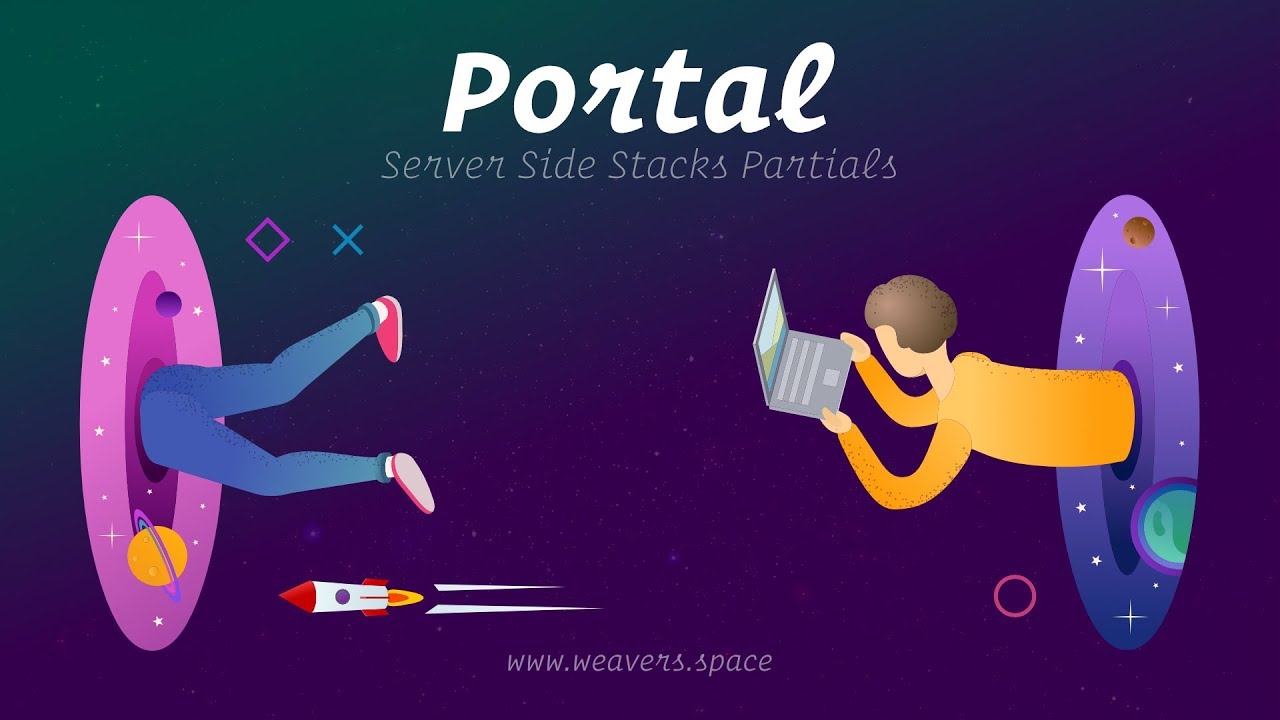
00:01 hey guys German here and in this video
00:04 I'm going to do a full-blown demo of the
00:08 new portal stack so the portal stack is
00:11 actually super easy to use
00:14 what it does is super complex and as the
00:18 old adage says making something simple
00:21 is not easy right so portal is super
00:24 simple to use but it is anything but
00:26 simple so what does portal do for us
00:30 right
00:31 you've probably checked out the sales
00:32 video by now but just a quick overview
00:35 portal allows us to basically use stacks
00:40 partials but on the server right so
00:43 first I'll let me say that hopefully
00:45 you've been using rap Weaver for a while
00:47 and you've already used and loved stacks
00:50 partials if you do not know what a
00:53 stacks partial is please stop what
00:55 you're doing don't look at the stack any
00:58 longer go look at what partials can do
01:01 and learn how to really leverage them
01:03 okay they're really important for the
01:05 wrapper workflow and for stacks
01:07 um they're very powerful and you should
01:09 really be using partials to make your
01:12 websites better and easier to maintain
01:15 so chances are if you're if you have a
01:18 large website what you're doing is you
01:20 have your footer inside of a partial
01:22 that's a common one right because
01:23 chances are your footer across your
01:25 entire site is gonna be the same right
01:27 now if you are going to want to update
01:31 your footer you just change the partial
01:33 and what stacks does is it updates the
01:35 entire website for you and so you only
01:38 have to make the change once you don't
01:39 have to go to every single page and make
01:41 changes brilliant but for large websites
01:45 you probably notice that you have to
01:47 reach up load pretty much the entire
01:48 website all over again just for one
01:51 change in your footer partial now for
01:55 some people that can take a very long
01:57 time and so this is pretty the primary
02:01 use case of why I created portal okay it
02:04 allows us to basically have server side
02:08 partials so what happens is let's say I
02:12 have a single footer page okay then I
02:16 it's slightly different right you
02:17 include with a portal stack you import
02:20 it into all your various pages and if
02:23 you publish that one footer page
02:25 it basically is included on all the
02:28 other pages on the server so in in the
02:31 footer scenario you just simply update
02:34 the footer page publish that to your
02:37 server and all of the pages that import
02:39 it will magically be updated immediately
02:42 right very cool it's very powerful and
02:45 there's some other side show you some
02:47 really nice side benefits of this as
02:48 well because essentially what Stax does
02:53 okay when we create a Stax page is its
02:58 bundling all this CSS and JavaScript for
03:00 us for the entire page and then
03:02 publishing that it's very nice it is an
03:04 amazing feat it's great now a benefit of
03:09 having of using portal is basically
03:12 let's take for example our footer again
03:15 when we create a page for our footer
03:18 that we can then import into other pages
03:20 Stax is creating its own JavaScript and
03:24 CSS files just for that footer area and
03:27 publishing those CSS and JavaScript
03:29 files to the server separately now when
03:33 we import this footer into all of our
03:35 other pages what's happening is instead
03:38 of the the JavaScript and CSS for that
03:40 footer beam inside of the page specific
03:43 JavaScript right it's gonna import the
03:46 same exact JavaScript in CSS code from
03:49 the footer page why is that powerful you
03:52 may ask well because if you're including
03:54 this footer and all your pages that
03:57 JavaScript in CSS is gonna be cached by
04:00 the browser and that essentially means
04:03 that it's gonna be subsequent page views
04:06 are gonna be a lot faster because it
04:08 doesn't need to download that CSS and
04:10 JavaScript again right and it's not just
04:13 for javascript in CSS it also includes
04:16 images that are on the page as well
04:17 which is really cool so you may not know
04:21 but if you include an image inside of a
04:24 Hershel that same image actually isn't
04:28 referenced many times right it's not
04:32 referenced one image isn't referenced
04:34 it's not like warehousing essentially if
04:36 you have a partial that's loaded on a
04:38 hundred pages that's a hundred different
04:41 images on your site
04:44 but with portal when you when you import
04:47 with portal you're gonna be referencing
04:49 the one central image that is stored
04:51 inside portal so again we get to benefit
04:55 from browser caching because that same
04:57 image is then gonna be referenced on all
04:59 the pages so as you see not only can
05:02 portal help us with publishing time and
05:05 maybe optimizing our workflows but it
05:08 will also make our websites faster
05:10 because we can leverage browser caching
05:12 our websites up into smaller pieces and
05:16 then including them throughout many
05:18 pages so I hope that is a really good
05:22 overview of what portal can do for you
05:24 and again if you haven't used partials
05:26 yet please stop what you're doing and go
05:29 learn partials and use those before you
05:32 try to tackle something like portal okay
05:34 so without further ado I'm gonna we're
05:37 gonna jump on in and do a quick demo of
05:39 portal like I said it's super easy to
05:42 use
05:43 and I'm really excited to see what you
05:45 can do with this and how it benefits
05:46 your websites so here is the portal demo
05:50 file that ships with the portal stacks
05:52 and theme now there's three components
05:55 to portal okay you'll notice if you in
05:58 your Stax library there are two
06:00 different stacks there's portal in and
06:02 portal out okay now there's also a
06:07 portal theme okay now this is a very
06:09 important aspect of portal okay so to
06:13 start off with we're gonna start with
06:15 the portal in Page essentially what this
06:17 page is this is the stuff that we're
06:19 gonna want to import into another page
06:21 right so this could be the thing like
06:23 your footer like we were talking about
06:24 earlier as a good example is a footer
06:27 right is this is going to be the content
06:29 that we're gonna import into other pages
06:31 so you have to have the portal in stack
06:34 on the page and another important aspect
06:37 is you have to set it is very important
06:40 as it says right here in the portal in
06:41 stack you must set the page to use the
06:44 portal theme okay so matter no matter
06:47 what theme you're using inside your
06:49 project this page you go into the theme
06:52 settings and you set it to use a page
06:55 specific theme and set that to be poor
06:58 okay so here's an important concept to
07:01 kind of help you remember
07:02 what's portal in and what's portal out
07:04 okay think of the portal theme has the
07:08 actual portal okay we have the portal in
07:12 stack which stuffs pages into the portal
07:16 we then have the portal out stack that
07:19 pulls stuff out of the portal right
07:21 portal in puts content in portal out
07:25 takes content out and displays it on the
07:28 page that kind of makes sense hopefully
07:31 so let's continue on with the day so
07:34 hopefully that made sense here we got
07:35 our portal in stack and we set our page
07:39 theme to use the portal theme now this
07:41 just has some simple content right some
07:43 text and image and some headers right
07:45 now now portal works with any theme but
07:49 I just want to give a quick note to
07:51 foundation users that you do not want to
07:54 add a site styles to this page okay
07:56 because basically what you're gonna want
07:59 to make sure that site styles is on the
08:00 page that you import this content into
08:03 via the portal out stack right so this
08:06 page should just be purely the content
08:09 that you want to import don't have any
08:11 site styles or font Pro or any other
08:13 stacks like that right now if you are
08:15 using foundation I did add a nice little
08:18 edit mode gift in here for you so that
08:20 all the foundation stacks will kind of
08:23 work properly and be themed properly at
08:25 least you won't get all your color
08:27 styles that you have from site Styles
08:28 beliefs you'll have everything will
08:30 still work properly inside edit mode
08:33 okay so that's a nice little gift for
08:35 foundation users but again portal will
08:37 work with any theme so if we jump over
08:40 to the portal out page um this is
08:43 basically where we are going to import
08:46 that content into it right so here I
08:50 have some local page content and here I
08:52 have the portal out stack essentially
08:55 all we need to do in the portal out
08:57 settings is click on the page and then
09:00 we're going to set the link and then
09:01 basically we're going to navigate to the
09:02 page inside rapidweaver
09:04 and say set link and that's it right so
09:07 you're going to point the portal out
09:09 stack to where the portal
09:12 in Paige is okay or the page that you
09:14 want to import and when you publish this
09:16 page it will work 100% um you know once
09:20 you published okay now you'll notice
09:22 that there is a total CMS setting this
09:25 does require that you have total CMS -
09:28 as of this recording total CMS - has not
09:31 been released so you will not be able to
09:33 use that setting until I've released
09:34 total CMS - and more on how all of that
09:37 works when the time comes so we said
09:41 that portal does all of its includes on
09:43 the server side however we can get
09:46 things to work inside rapidweaver okay
09:50 and let's just show you I'm just gonna
09:52 show you how it doesn't work first so if
09:54 I preview this portal out page we'll see
09:58 that magically where this import content
10:01 it's blank
10:02 like what in the world I was expecting
10:06 an import to happen well because the way
10:09 rapid Ivar works essentially is wrapped
10:11 Weaver cashes content and because I've
10:13 never previewed this portal in page
10:14 right so if I preview this portal in
10:17 page okay so here I've previewed this
10:20 page now if I go ahead and go to the
10:25 portal out page if I preview this now
10:27 we'll see that the portal in content now
10:30 works okay so it does work in Rev Weaver
10:34 as long as you preview the portal in
10:36 page first okay so a small little caveat
10:40 there if you are previewing a page and
10:43 you don't see the content that you were
10:44 expecting just make sure that you
10:46 preview that page inside rapidweaver and
10:50 then go back to your portal out page and
10:52 it should work just fine so that about
10:55 does it as you see portal is really easy
10:57 to use there's essentially one setting
10:59 to get all of it working right there's a
11:01 little bit of work you got to set the
11:02 page specific theme on the portal in
11:04 page and then on the portal out page you
11:07 just select the page and you're done
11:09 right there's a couple caveats with
11:11 giving it to preview properly wrap
11:12 Weaver but it's not rocket science there
11:14 okay now what will work inside portal so
11:19 I have using been using portal on Weaver
11:22 space in the actual Weaver space website
11:25 since launch and all of the internal
11:27 demos on the product pages are all
11:29 imported via portal that's important
11:33 because it means that all of my stacks
11:35 every single one of them works really
11:38 really well inside portal so that's
11:40 hundreds of stacks now that work
11:42 perfectly well inside portal now I
11:45 haven't tested every stack out there
11:46 obviously okay and there is probably
11:49 there may be some conflicts out there
11:50 I'm sure that there are um so if you're
11:54 trying something really crazy like a
11:56 don't try to import a portal in a portal
11:59 I haven't even tested that um if it
12:02 works you're nuts
12:05 but um you know keep it simple okay just
12:10 you know build what you need and import
12:12 it keep things like I've tested things
12:14 like you know complex sliders like
12:15 moving box they seem to all work very
12:17 well now in portal it's taken me a long
12:19 time to get all that working but it
12:21 works pretty well I'm really excited
12:23 about it but if you if you hit some
12:26 complex let me know probably publish to
12:29 a server you know and give me the URL
12:31 and I can try to figure something out or
12:34 you know I can work with the other
12:36 developer to see if we can get something
12:37 working but I can't guarantee that
12:39 everything will work right but like I
12:43 said all of my products work well in it
12:45 and that's a really large set of stacks
12:48 so hopefully everything works works
12:52 really well for you and if you have any
12:54 issues let me know and I can't wait to
12:56 see it I hope you enjoy portal I hope it
12:59 helps you become a better web designer
13:00 improve your workflows and obviously
13:03 faster websites because we all love that
13:05 so we will talk to you later and I hope
13:08 you enjoy portal bye
13:20 you