Stacks Guru is born from the need to search the vast number of videos out there on stacks built for Stacks Pro and the Stacks 5 plugin for Rapidweaver.
We have scraped over 500 videos to get the transcripts for each in order to make the spoken word searchable.
Please use this free tool to help you learn and discover the awesome power that Stacks and the stacks made for Stacks have to offer.
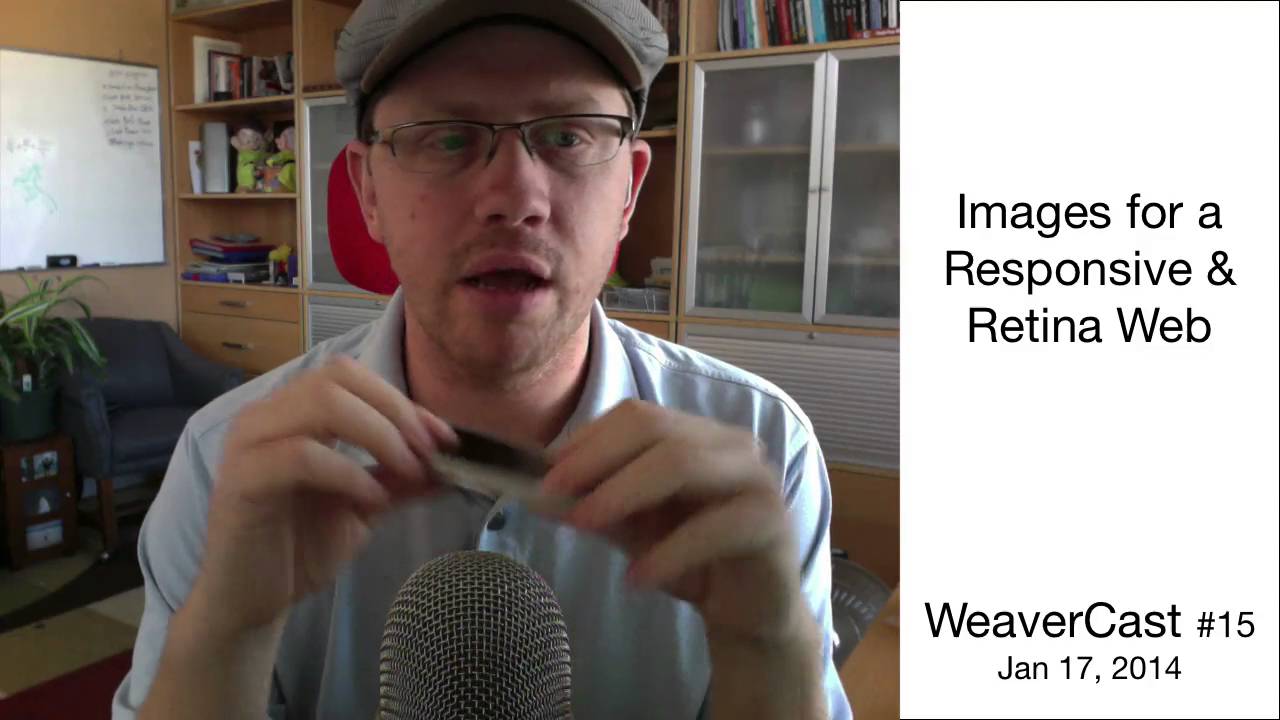
00:07 hello everyone welcome Weaver cast
00:09 Weaver cast is a weekly podcast
00:11 providing tips and tricks for
00:13 rapidweaver and web design I am Joe
00:15 workman an indie mac and web developer
00:18 based in San Francisco today this is
00:21 show number 15 and it is Friday January
00:24 17th Weaver cast is no longer than 1
00:26 minutes so let's get started so in
00:30 today's show we're going to talk about
00:32 images in you know today's web uh things
00:37 were a lot different than it used to be
00:38 we used to have static web pages with
00:40 static widths and you just threw an
00:42 image out there and an image had a
00:43 standard width and height and we were
00:45 good right but now these things these
00:49 things came up right we have all these
00:52 cool devices that are all different
00:54 sizes and not only are all these cool
00:57 devices that we all love and have in our
00:59 pockets um you know cool and they're not
01:02 only just different sizes they also have
01:04 new screen technology right so these are
01:07 retina displays so we're going to talk
01:09 about what a retina display is about how
01:13 we handle images on different sizes how
01:16 can we make our images look nice on all
01:18 devices and in some tips and tricks on
01:21 optimizing all of these images that we
01:23 need on our website so first off what is
01:28 a retina display okay um so it's obvious
01:31 that you know a desktop has a different
01:33 screen size and an iphone I think we can
01:35 all get that right but what is a retina
01:40 display what what is a Retina display
01:42 and why does that make a difference okay
01:44 why would an image that I provide on a
01:49 ret non retina display look blurrier not
01:53 as sharp on a display that is retina
01:57 right so retina displays is a great new
02:02 technology and essentially what that
02:04 means is there are more pixels on your
02:07 display so let's take a standard iphone
02:11 for example okay
02:13 let's pretend we had a Retina display
02:16 and a non-retina iphone 5 like this
02:19 right here even though the screen
02:22 dimensions would be identical for a
02:24 retina and non-retina display the retina
02:27 display has four times the number of
02:29 pixels because it has double the amount
02:32 of pixels wide and double the amount of
02:34 pixels height so effectively for every
02:37 one pixel on a non retina display we
02:39 have four pixels ok now the makers of
02:44 all these devices have done some great
02:46 technology that allows basically to
02:49 display non-retina images and content on
02:55 a Retina device and the way it does that
02:57 is it up scales everything so it takes
02:59 one pixel on that would have been shown
03:02 for a non retina and displays that over
03:05 four pixels on a Retina device so what
03:11 that means is is it's basically making
03:14 the image bigger physically it looks
03:17 like it's the same size but since there
03:19 are more pixels it's scaling the image
03:22 up so what we're going we're going to
03:27 review today is how to actually overcome
03:30 that how can we make our images look
03:32 sharp on both retina and non-retina
03:35 displays and then we're going to show
03:38 you some tricks on how to make images
03:41 you know download faster so your web
03:43 pages are snappy and zippy and finally
03:47 we're going to go over um you know how
03:49 to make them responsive so let's dive
03:52 into it so the first thing that we're
03:56 going to show you right now is the
03:58 simplest thing which is basically taking
04:00 an image and scaling it down so that it
04:03 looks good on both desktop and mobile
04:06 devices now in this instance i'm using a
04:12 theme from elixir graphics named ruby
04:15 it's a great theme and it has the
04:17 built-in feature that it will
04:19 automatically scale down images for you
04:22 now this feature is built into many
04:24 themes but it is a theme specific
04:27 feature
04:27 so if you know that you have a
04:29 responsive theme that actually supports
04:31 this let's go ahead and show you how to
04:34 do that so this couldn't be easier to do
04:36 all I did is added an out-of-the-box
04:39 image stack to my page and added an
04:42 image within it and that's really all
04:45 you need to do preview your site and
04:48 you'll notice that you have a beautiful
04:50 image and the theme takes care of
04:51 actually resizing that image for you now
04:55 a little side note about stacks images
04:57 any image that you add within stacks you
05:00 can double click and enter an image
05:03 editor now I want to note that all of
05:06 these layout settings that you're seeing
05:08 here will actually modify the image
05:11 directly so these max with max height
05:14 settings that you see here that means if
05:17 you add an image that is larger than 80
05:20 pixels by default into stacks stacks
05:23 will automatically scale at image down
05:25 to 800 pixels so if you are adding an
05:29 image that is larger than 800 pixels by
05:31 800 pixels you're going to want to make
05:33 sure that you go ahead and uncheck these
05:35 settings within stacks and then below we
05:40 have borders and shadows now again these
05:42 are not adding borders and shadows via
05:45 CSS if you use these image settings they
05:48 will actually add a border to your image
05:50 modify the image and upload the modified
05:53 image to your site so what if we were to
05:57 be able to provide a smaller resolution
05:59 image that is downloaded on mobile
06:02 devices and then the larger image will
06:05 be used when a user visits from a
06:07 desktop device that would really be a
06:10 great solution so on if a user visits
06:14 our website via a mobile device a lower
06:17 resolution image will be used and then
06:20 if that same user goes to a desktop
06:22 device the higher resolution image will
06:24 be used this is really the best of both
06:27 worlds because um you're getting your
06:30 users are getting a much more responsive
06:32 experience on their mobile device
06:34 they're getting the same image and sync
06:36 quality because the image is being
06:38 scaled down they don't need a
06:41 pixel image right but they're the web
06:45 site experience is better for them
06:47 because a 200 pixel or 300 pixel image
06:51 is going to download a lot faster on the
06:53 slower mobile bandwidth so in my sample
06:57 project I've replaced the normal image
06:59 stack with my fluid image stack what's
07:03 really special with this stack is it
07:06 will auto generate a thumbnail for you
07:08 so if we look at the browser experience
07:10 it actually looks exactly like we saw
07:12 before we have our large scaled image on
07:14 our desktop and then if we look at the
07:17 mobile device we have a the same scale
07:20 down image however if we look a little
07:23 bit closer will notice a big difference
07:25 here so here i have the safari dev
07:27 inspector and right now i have the image
07:30 highlighted on the mobile browser and
07:31 will notice that the actual natural size
07:34 of this image is 500 pixels by 31
07:37 pixels that's a lot smaller than the
07:40 actual image that i dragged in which was
07:42 over a thousand pixels wide so here i am
07:45 looking at the actual published files
07:47 for this web page and we'll see that the
07:51 full image resolution for the image that
07:55 is displayed on the desktop is 128
07:58 pixels by 800 and the size of the image
08:01 is 74 k if we look at the thumbnail
08:03 though um it has been scaled down to 50
08:06 pixels by 312 pixels so it's scaled down
08:09 proportionally but the size is only 12k
08:12 now in this particular instance we've
08:14 saved eighty-five percent bandwidth
08:16 utilization for one image now imagine
08:19 doing that across all of your images on
08:21 your web page now earlier I talked about
08:24 how retina displays on take up four
08:27 times the amount of pixels twice the
08:31 width and twice the height so
08:33 essentially all we would need to do to
08:36 make fluid image support retina devices
08:40 is to add an image into it that is twice
08:44 the size of the actual size that we'd
08:47 like the image to be displayed in and
08:49 then fluid image will dynamically resize
08:52 that image down to the actual max
08:55 with it you define within the stack
08:56 settings this way the image will look
08:59 beautiful on both retina and non-retina
09:03 devices now the next point I'd like to
09:06 make is actually optimizing images up
09:08 before you even add them into your
09:11 rapidweaver project a lot of times we'll
09:14 find an image on the web or we'll maybe
09:17 create an image in Photoshop and we'll
09:19 export it and really that image is quite
09:22 large um so a make sure that it's the
09:26 correct pixel dimensions first so resize
09:28 it down don't add a 10,000 pixel or a
09:32 megapixel image into your rapidweaver
09:34 project scale that image down to the
09:37 actual size that would be required to be
09:41 displayed on your website and another
09:44 great amazing tool that I can't
09:47 recommend more is it great tool called
09:49 image optum and it has amazing image
09:54 compression algorithms to really take
09:57 this same your same exact image and
09:59 compress it down with zero noticeable
10:03 difference so everyone thanks for
10:05 joining today I hope you really enjoyed
10:07 it I hope you learned how a little bit
10:09 on how to manage images within your web
10:11 sites and your app weaver projects and
10:14 how do how really important it is to
10:16 optimize your images for the best
10:18 website performance with just a few
10:21 small tweaks in your workflow you can
10:23 really get a much better looking and
10:26 faster website with some tips that we
10:28 viewed here so if you have any questions
10:31 comments or concerns please feel free to
10:34 contact me on Twitter and app.net I'm at
10:37 Joe workman you can always reach me with
10:40 email at support at Joe or net and I
10:44 appreciate if you have a look at some my
10:46 products go to Joe or chrome net and
10:48 look at some of the great rap we were
10:50 add-ons and mac apps that we have and
10:52 continue supporting of this podcast so
10:55 thank you very much everybody I hope you
10:57 have a wonderful day and thanks for
10:59 attending bye